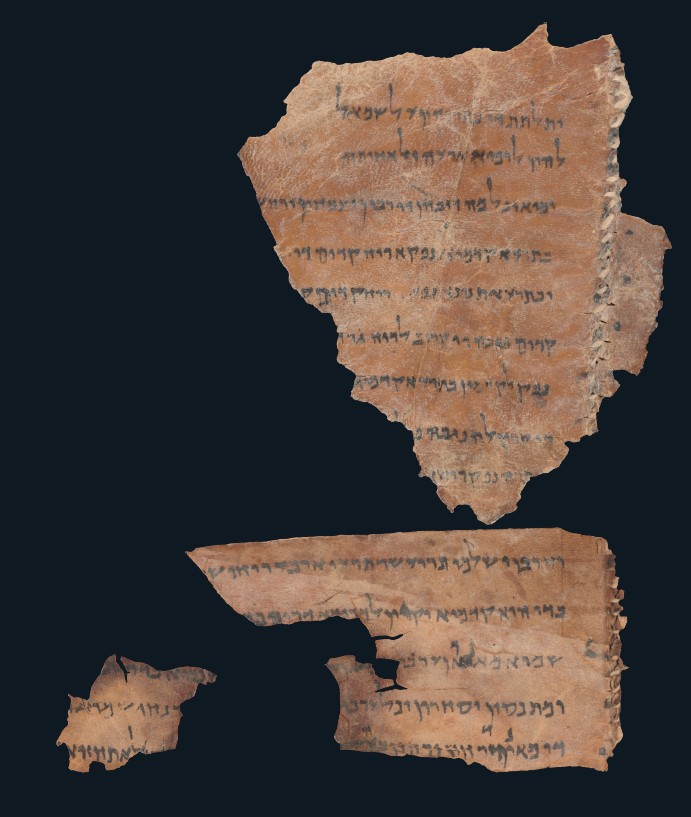
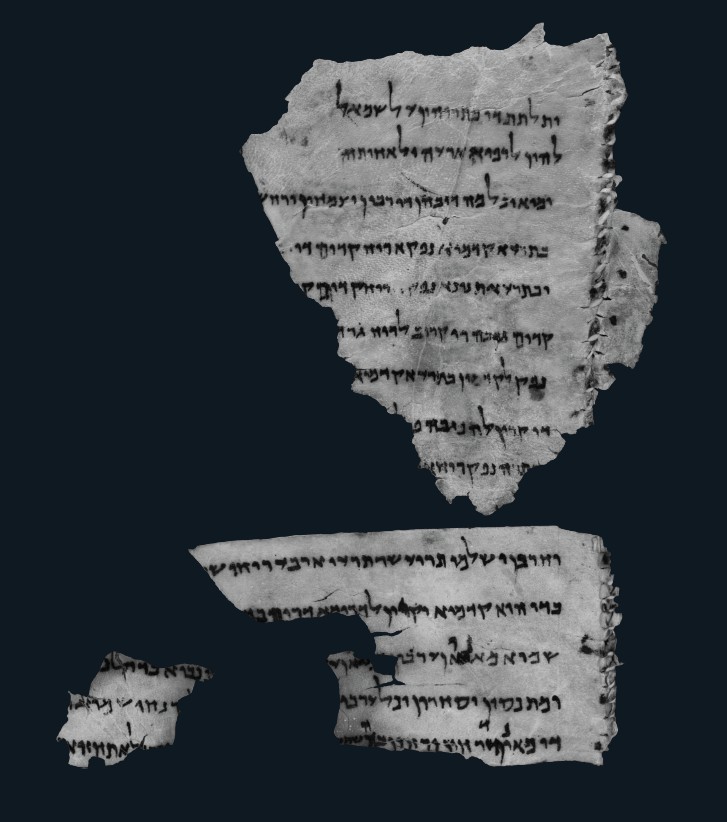
(c) Images Courtesy of the Leon Levy Dead Sea Scrolls Digital Library. Photo, Shai Halevi. www.deadseascrolls.org.il
The Books of Enoch rank among the earliest surviving Jewish texts outside the Bible, with some dating to the third or fourth century BCE. They expand on brief biblical hints about Enoch, Noah’s great-grandfather, and the mysterious “Sons of God.” Genesis simply says Enoch “walked with God” for 365 years before “God took him.” The Books of Enoch elaborate this into detailed accounts of Enoch’s heavenly ascent and angelic journeys, likely containing our earliest version of the fallen angels myth. These books profoundly influenced the Dead Sea Scrolls community, shaping their understanding of sin’s origins, demonology, and their distinctive 364-day solar calendar. Before Qumran’s discovery, Enoch survived only in Ethiopian translation. This particular scroll describes an angelic tour of creation’s wonders, given by the angel Uriel to Enoch, who then shares it with his son Methuselah. The account includes dividing the sky into twelve “gates”—three for each cardinal direction.
Frag. 1
Detail Translation
1 and the following three, to the North. [And the following three, to the West. Out through four of them go the winds which]
2 are for the healing of the earth and its revitalization. And [out through eight go the harmful winds; when they are sent they destroy all the earth]
3 and the waters and all there is in them, what grows and flowers and creeps, [both in the waters as on dry land and all that lives in it. First,]
4 the wind from the East goes out through the first gate which is in the [East and veers to the South. Out through it go destruction, drought, heat and desolation.]
5 Out through the second gate, (the middle one), goes the wind from the East-by-Ea[st: rain. fruits, renewal of life and dew. Out through the third goes the wind]
6 from the northeast, which is close to the wind from the North: [cold and aridity. Behind them,]
7 out goes, first, through the first gate, [a wind from the South, which is to the South and the East: [a hot (?) wind. Out through the second gate goes a wind from the South]
8 which they call the South: dew, [rain, well-being and renewal of life. Out through the third gate goes a wind from the Southeast: dew, rain, locust and destruction.]
9 Behind it a wind from the [North] goes out
[xxx] = restoration of missing text based on other versions of the same text or scholarly research
LORD = the Tetragrammaton, the four-letter name of God in the Hebrew Bible
 Dead Sea Scrolls: The Exhibition at museum of the bible - Nov. 22, 2025-Sep. 6, 2026