(c) Images Courtesy of the Leon Levy Dead Sea Scrolls Digital Library. Photo, Shai Halevi. www.deadseascrolls.org.il
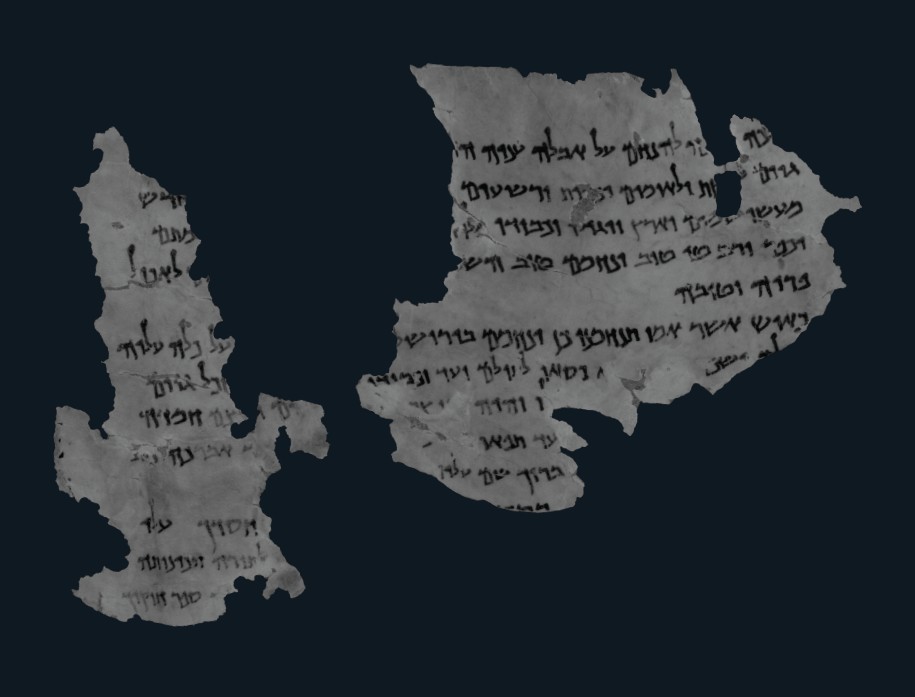
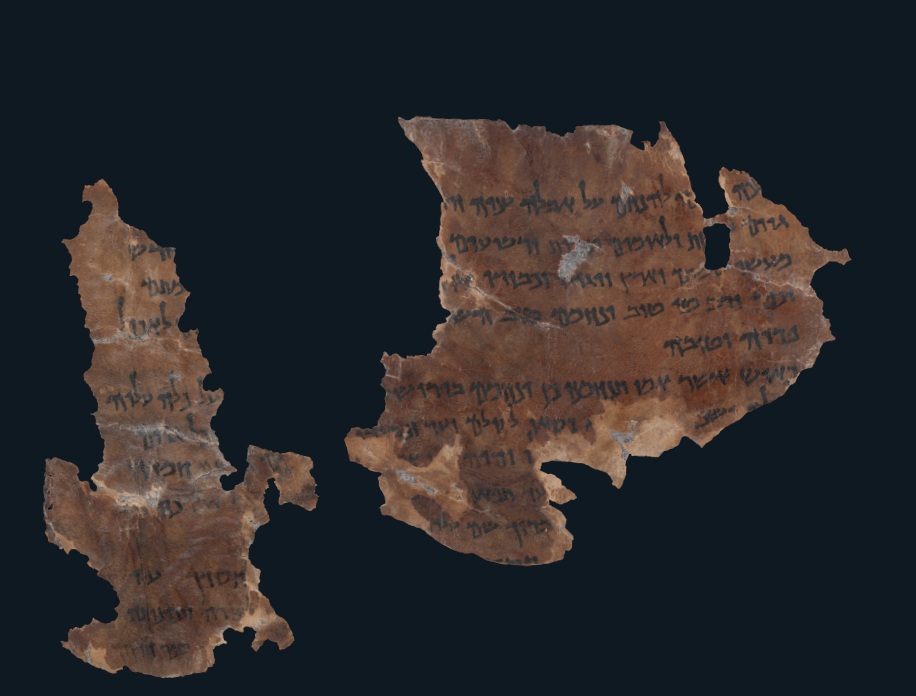
The biblical book of Psalms contains 150 hymns, but ancient Israel used many more. The Dead Sea Scrolls have revealed numerous previously unknown psalms, with 4Q434 being a prime example of non-biblical psalms that follow biblical style. This scroll contains 15 fragments, many beginning “Bless, O my soul, the LORD” (Barkhi Nafshi)—a phrase also found in biblical psalms like 103 and 104. However, there’s a notable difference: while biblical psalms use the tetragrammaton (the four sacred Hebrew letters for God’s name), this text uses the common word for “lord.” These appear to be thanksgiving hymns praising God’s power and expressing gratitude for delivering his people from destruction. All the Barkhi Nafshi texts draw on heart imagery—a frequent biblical metaphor representing the human center of knowledge and emotion.
Fragment 1
Detail Translation
1 [ . . .] t o be consoled in the sorrow of the poor [. . .]
2 to destroy the peoples and tear apart the nations and the wicked […] renew
3 the deeds of the heavens and of the earth, and may they rejoice and may his glory fill [all the earth
4 he will atone and the great in goodness will console them. Good is the [. . .] to eat
5 its fruit and its goodness. [. . .]
6 As a man consoles his mother, so will he console Jerusalem . . . Like a fiancé] with his fiancée
7 he will live for e[ver . . . f]or his throne is forever and ever and his glory [. . .] and all the peoples
8 [ . . .] and he went with him […] desirable
9 [ …] splendor […]
10 [. . . ] Blessed be the name of the Most High [. . . ]
11 Blessed be [. . . ] his mercy upon me
12 [. . .] for the Law which you established
13 [. . .] the book of your laws
[ . . . ] = a gap in the text owing to damage or illegibility
[xxx] = restoration of missing text based on other versions of the same text or scholarly research
LORD = the Tetragrammaton, the four-letter name of God in the Hebrew Bible
 Dead Sea Scrolls: The Exhibition at museum of the bible - Nov. 22, 2025-Sep. 6, 2026