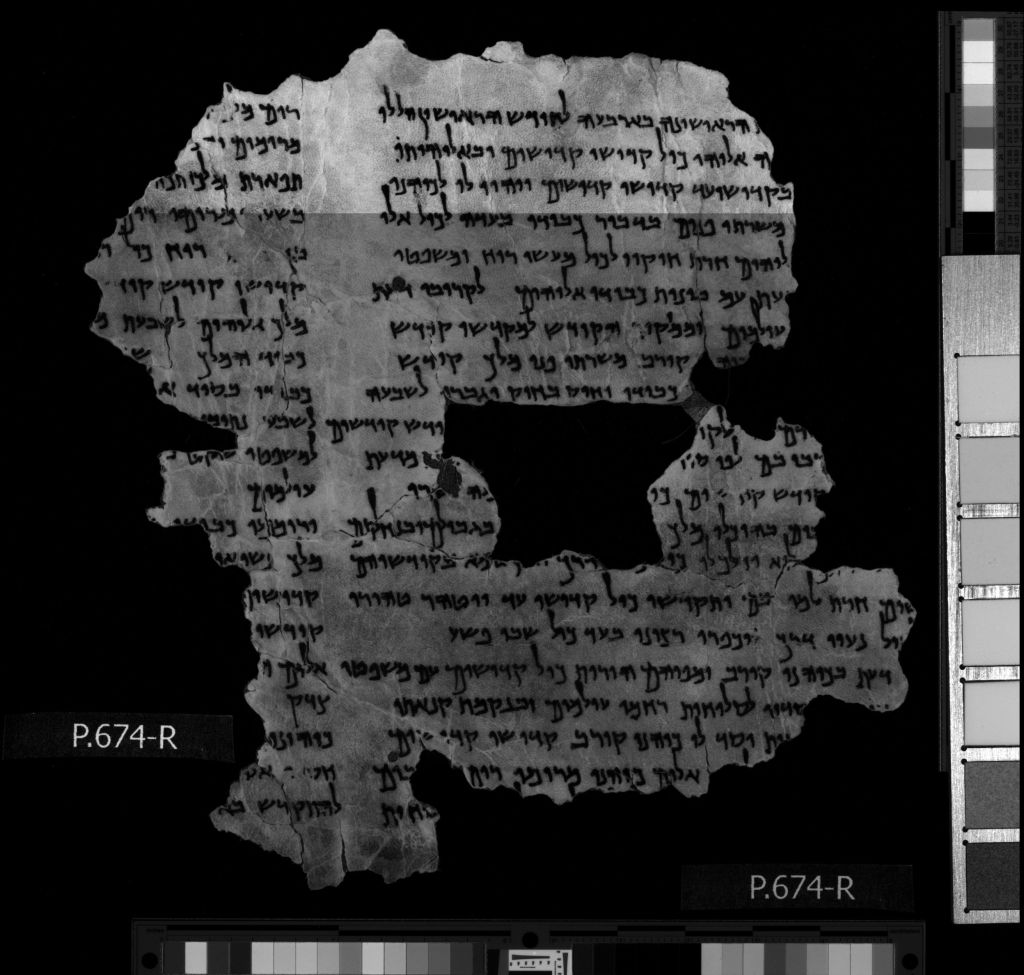
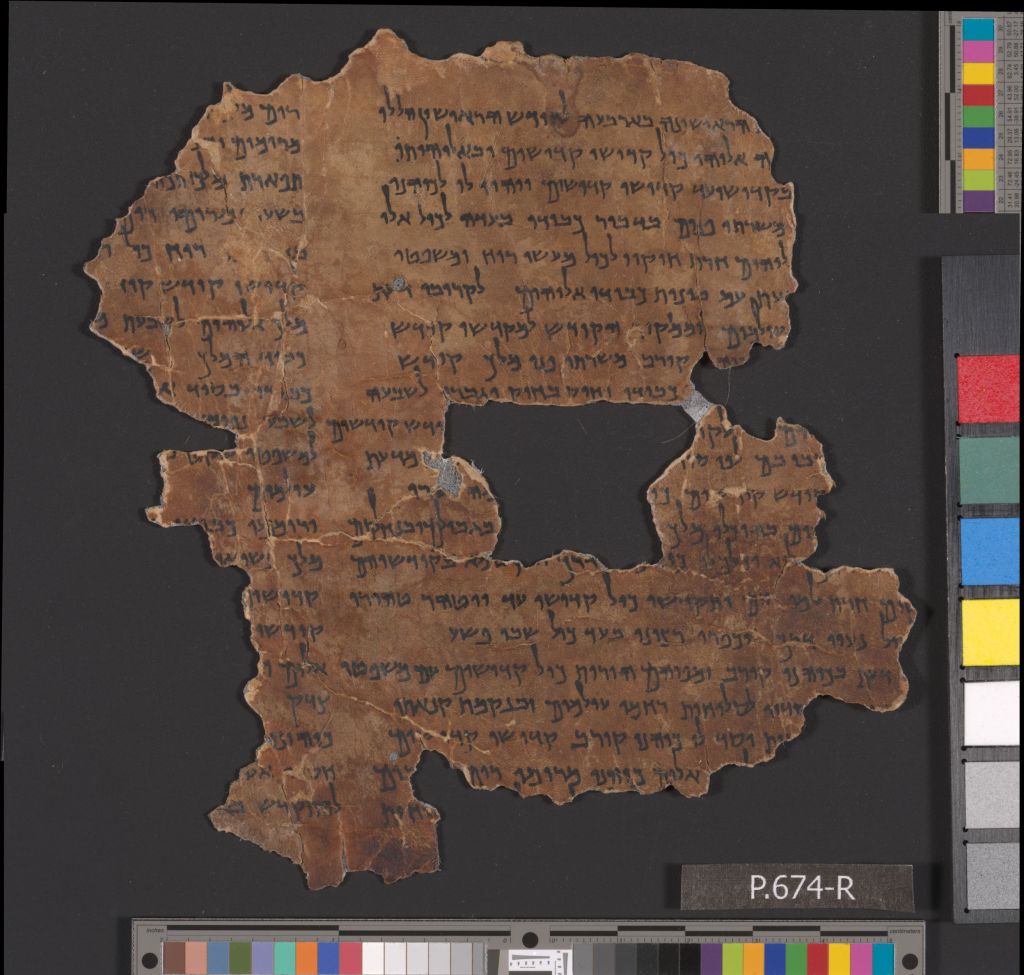
(c) Images Courtesy of the Leon Levy Dead Sea Scrolls Digital Library. Photo, Shai Halevi. www.deadseascrolls.org.il
Ten manuscripts of this remarkable liturgical text have been discovered—nine from the Qumran caves and one from Masada. Known as the Songs of the Sabbath Sacrifice, it contains 13 songs of praise intended for the first 13 Sabbaths of the year, following a 364-day solar calendar used by the community.
Each song opens with a formal invocation: “For/by the maskil (sage). Song of the sacrifice of the … Sabbath on the … of the … month. Praise the God of …” The texts that follow are extraordinary. They invoke angelic praise, describe the angelic priesthood serving in heaven’s temple, and recount the worship performed each Sabbath in the celestial sanctuary itself.
The purpose becomes clear: these songs allowed the community to experience worship not as isolated humans, but as participants in a cosmic liturgy celebrated alongside the angels. Imagine the power of believing that your Sabbath prayers joined the heavenly chorus.
How exactly were these texts used? Scholars remain uncertain. They may have been recited during communal Sabbath services, though the precise ritual setting is lost to time. The scroll itself is made of thin, light buff-colored leather with a remarkably smooth surface marked by clear vertical and horizontal guiding lines.
Detail Translation
1 [Of the maskil. Song for the sacrifice] of the first sabba]th, the fourth of the first month. Praise
2 [the God of…] you, gods of all the most holy ones; and in the divinity
3 [of his kingdom, rejoice. Because he established] the most holy ones among the eternal holy ones, so that for him they can be priests
4 [of the inner sanctum in the temple of his kingship], the servants of his presence in his glorious sanctuary. In the assembly of all the divinities
5 [of knowledge and in the council of all the spirits] of God, he has engraved his ordinances for all spiritual creatures, and [his]
6 [glorious] precepts [for those who establish] knowledge, the people of the intelligence of his divine glory, BLANK for those who are close to
knowledge.
[xxx] = restoration of missing text based on other versions of the same text or scholarly research
LORD = the Tetragrammaton, the four-letter name of God in the Hebrew Bible
 Dead Sea Scrolls: The Exhibition at museum of the bible - Nov. 22, 2025-Sep. 6, 2026