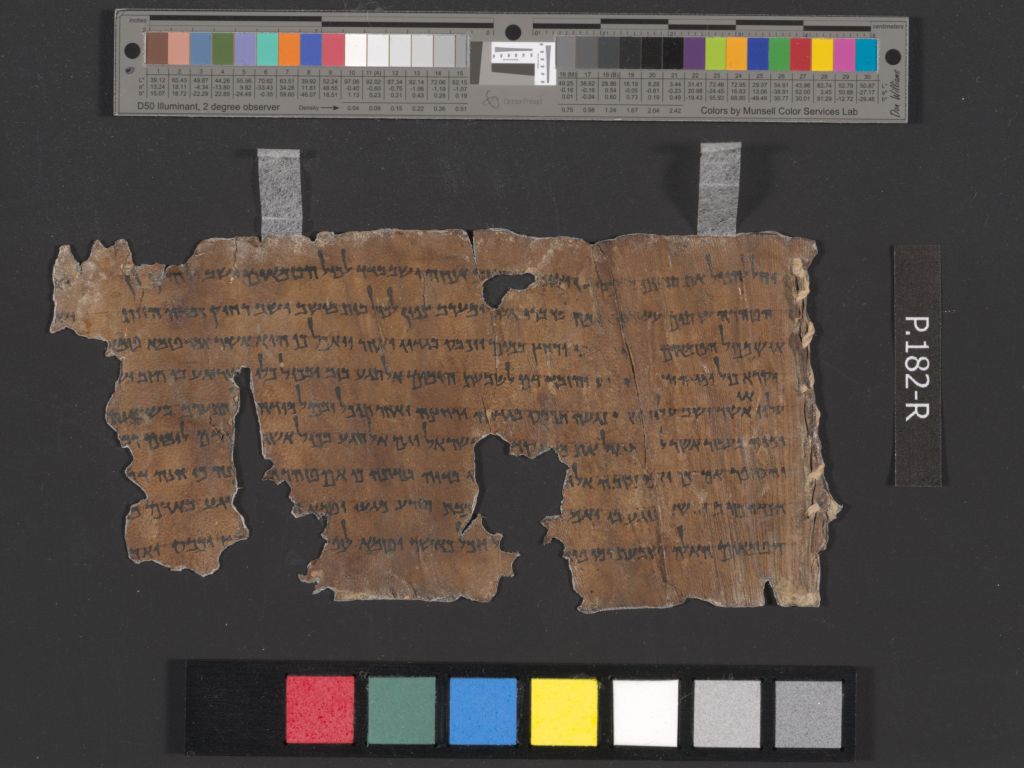
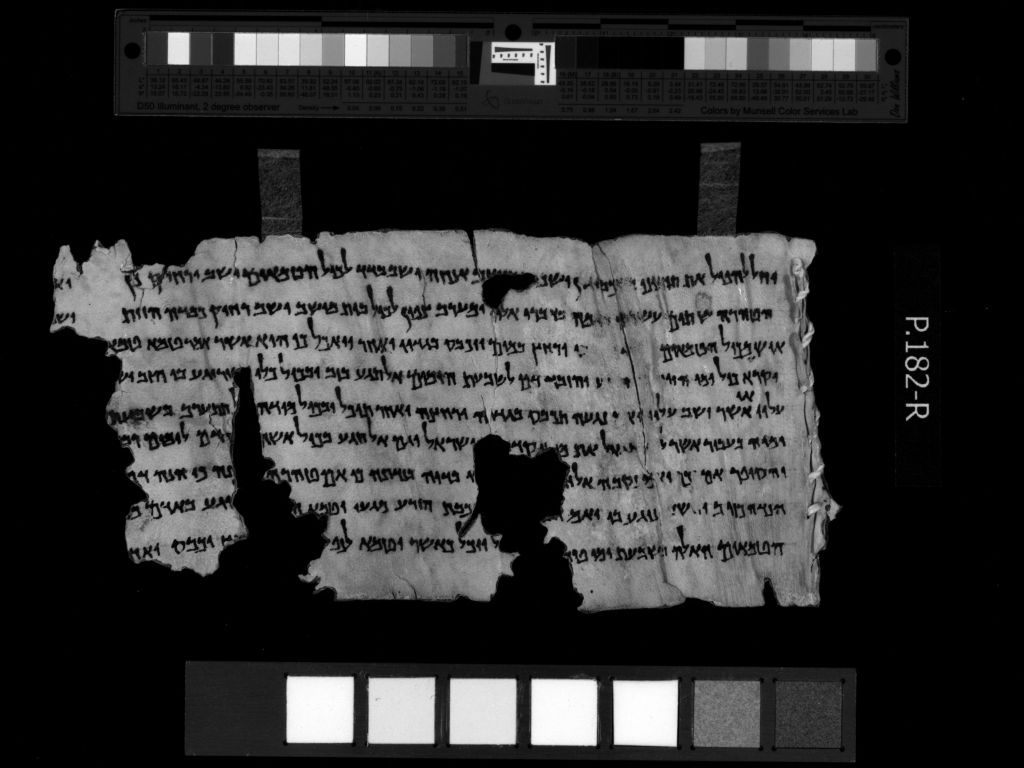
(c) Images Courtesy of the Leon Levy Dead Sea Scrolls Digital Library. Photo, Shai Halevi. www.deadseascrolls.org.il
Only five small fragments survive of this text, but they address a subject of profound importance to ancient Jewish life: ritual purity.
The Hebrew Bible contains numerous laws about conditions that render someone ritually impure—skin diseases, contact with corpses, and various bodily discharges. Anyone deemed impure had to separate from the community for a specified period. This scroll deals specifically with contamination through bodily discharges: menstrual blood and semen. It quotes directly from Leviticus 15, showing how closely the community adhered to biblical law.
During the Second Temple period, maintaining communal purity was an overwhelming concern. The archaeological record confirms this obsession at sites throughout ancient Judea—Jerusalem, Masada, Qumran, and beyond. Communities developed very public methods for managing individuals in states of ritual impurity to prevent contamination of the broader population through contact. Why such elaborate precautions? Liquids were believed to be among the most powerful transmitters of impurity. This explains the extraordinary care and time devoted to managing bodily discharges. What might seem excessive to modern readers reflected a worldview in which spiritual contamination posed a genuine threat to the entire community’s relationship with God.
Detail Translation
1 He shall begin to lay down his rank; he shall lie down in a bed of sorr[o]w, and in a residence of lamentation he shall reside; he shall reside apart from the impure, at a distance of
2 twelve cubits from the pure food; in the quarter reserved for him, to the northwest of any dwelling he shall dwell at the distance of this measure.
3 Every impure man […] […] shall bathe in water and wash his clothes and afterwards he will eat. For this is what he said: Lev 13:45-46 <Unclean, unclean
4 he will shout all the days that the […]>>. And she who has discharge of blood during the seven days shall not touch a man with discharge or any
of the utensils [wh]ich the man has touched,
5 upon which he has l[ain] /or/ upon which he has sat. And if she does touch, she shall wash her clothes and bathe and afterwards she may eat.
And she must not mingle in any way during her seven
6 day period lest she contaminate the camps of the holy [ones of] Israel. Nor should she touch any woman [with a discharge] of blood of the seve[ral] days.
7 And the one who counts (one’s seven days) whether male or female, should not to[uch…]… at the onset of her menstruation unless she is pure
of her [mens]truation for behold the blood
8 of menstruation is considered like a discharge for him who touches it. And whoever [has an em]ission of semen contaminates through contact. [And whoev]er touches anyone
9 of these impure persons during the seven days of [his] puri[fication] shall [no]t eat like whoever is impure through (contact with a) corp[se. He shall ba]the [in water] and wash and aft[erwards]
[xxx] = restoration of missing text based on other versions of the same text or scholarly research
LORD = the Tetragrammaton, the four-letter name of God in the Hebrew Bible
 Dead Sea Scrolls: The Exhibition at museum of the bible - Nov. 22, 2025-Sep. 6, 2026