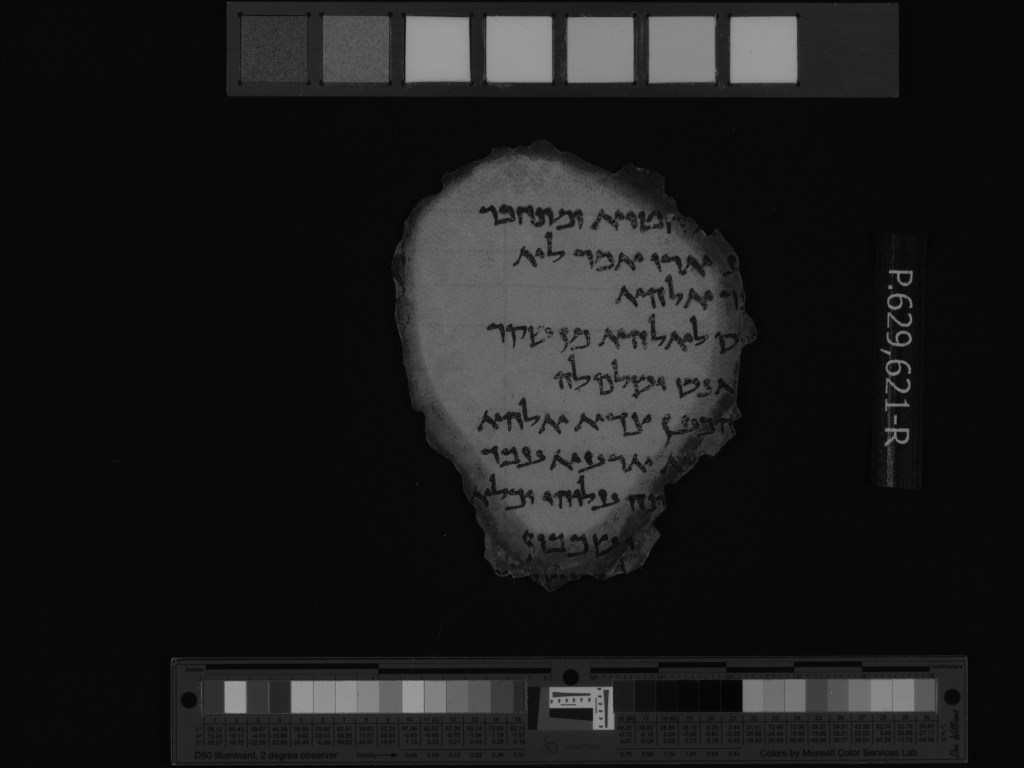
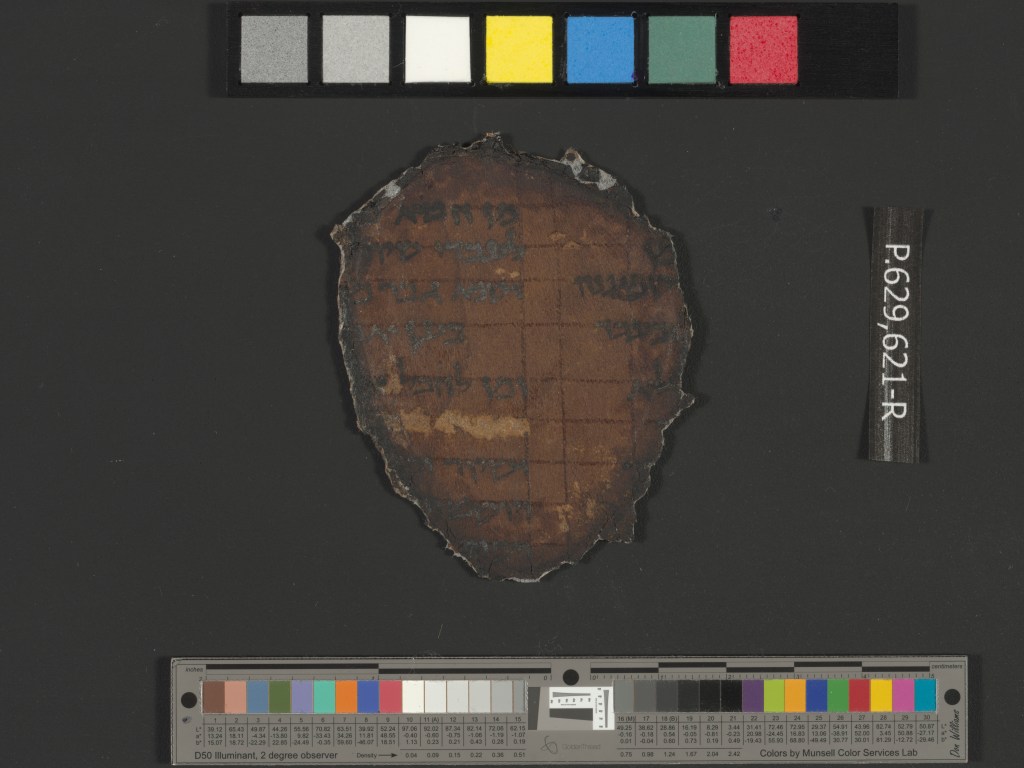
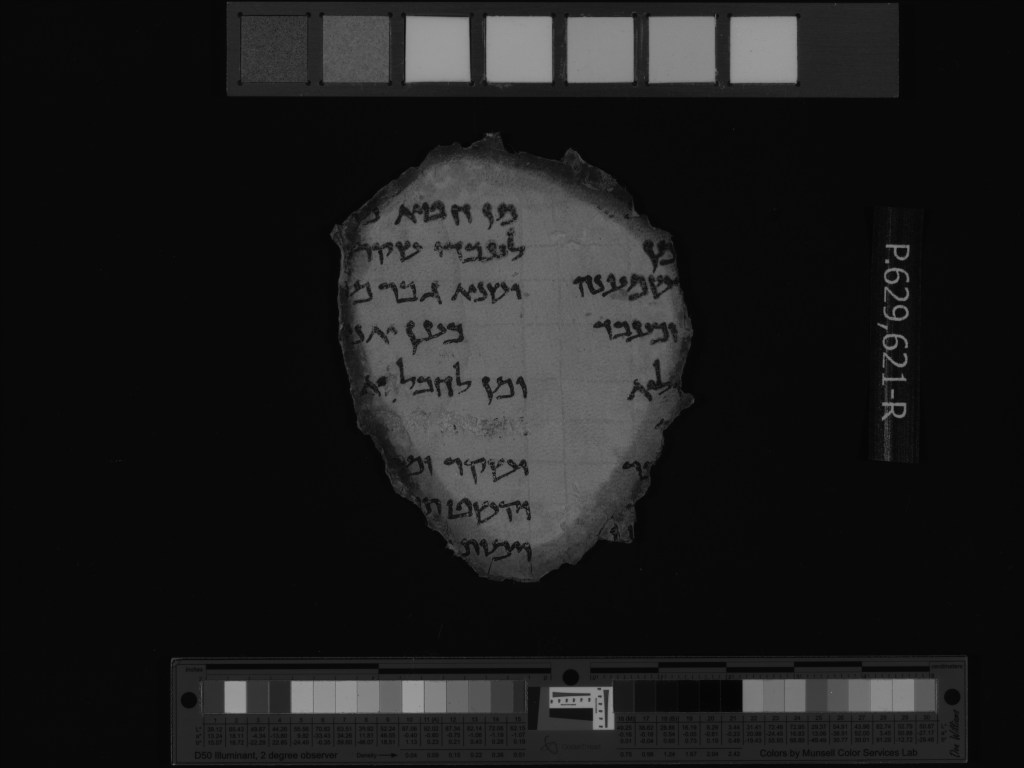
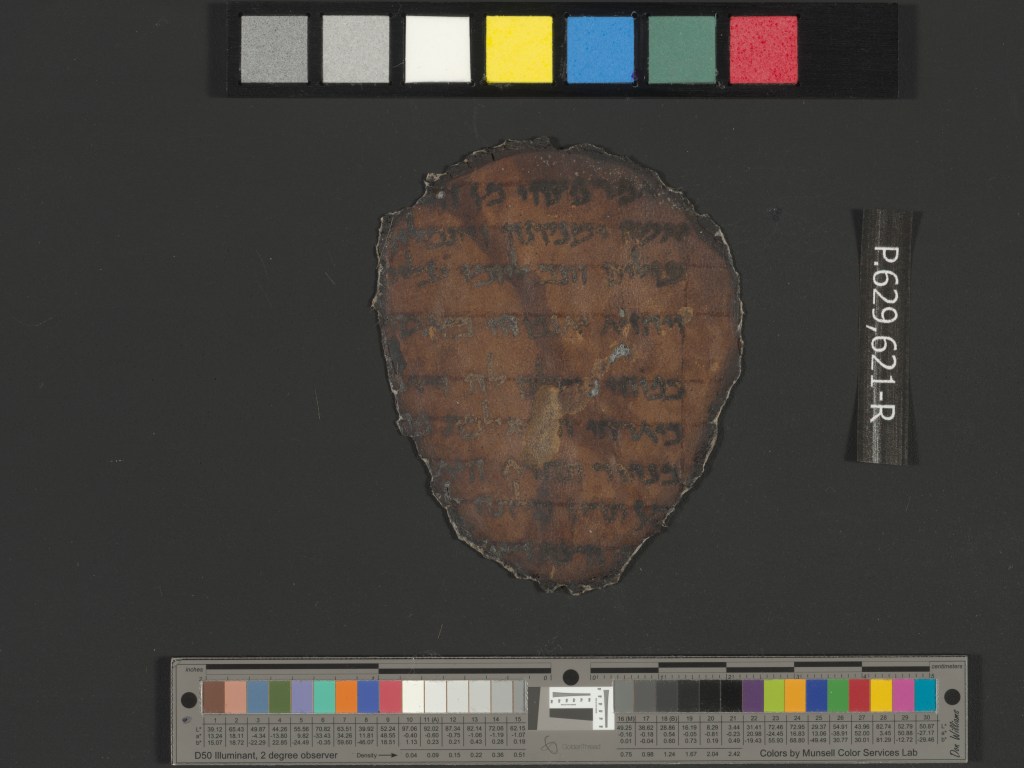
(c) Images Courtesy of the Leon Levy Dead Sea Scrolls Digital Library. Photo, Shai Halevi. www.deadseascrolls.org.il
11Q10 is a translation into Aramaic of the biblical Book of Job. Other similar translations were known before the discovery of the Dead Sea Scrolls. However, the version found in 11Q10 – together with 4Q157, a much more fragmentary copy of the same text – is probably centuries older than all other known Aramaic translations of Job. The translation was dated on linguistic grounds to the 2nd century BCE. 11Q10 was copied much later, in the mid-1st century CE. This makes it one of the youngest Scrolls discovered at Qumran.
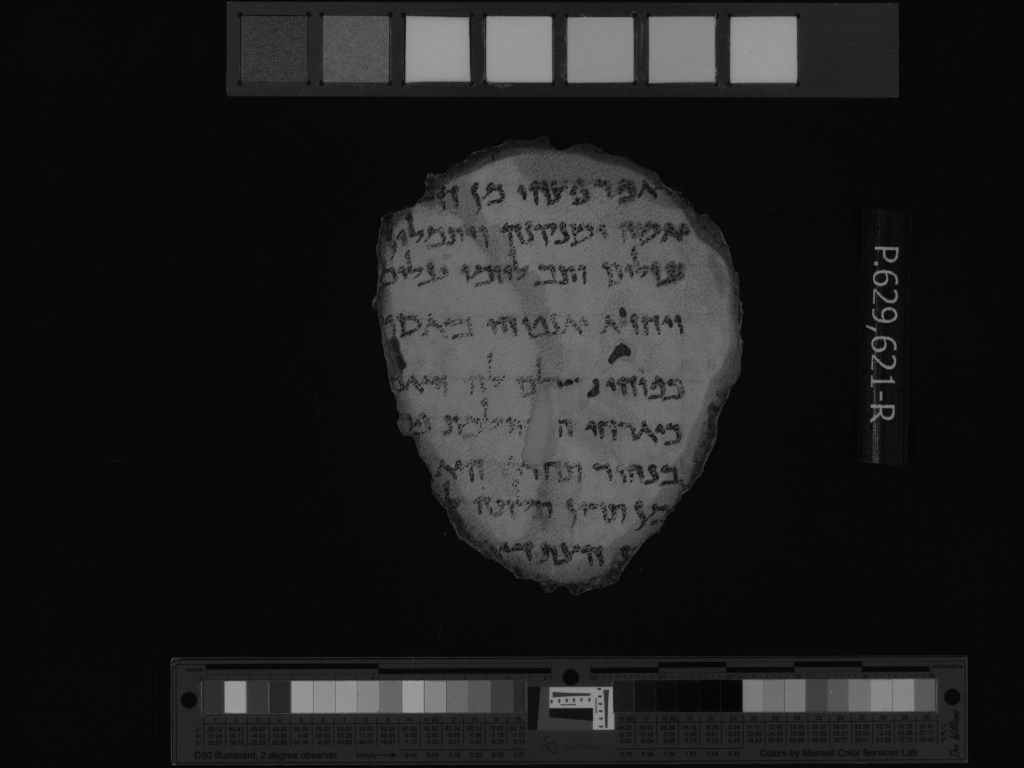
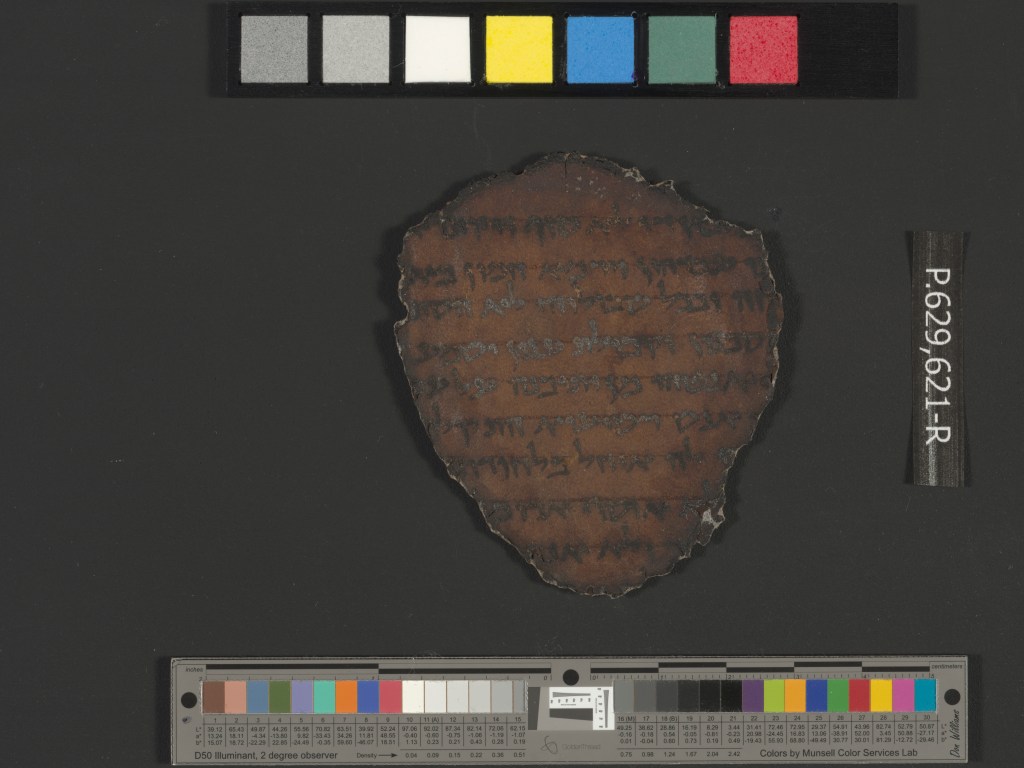
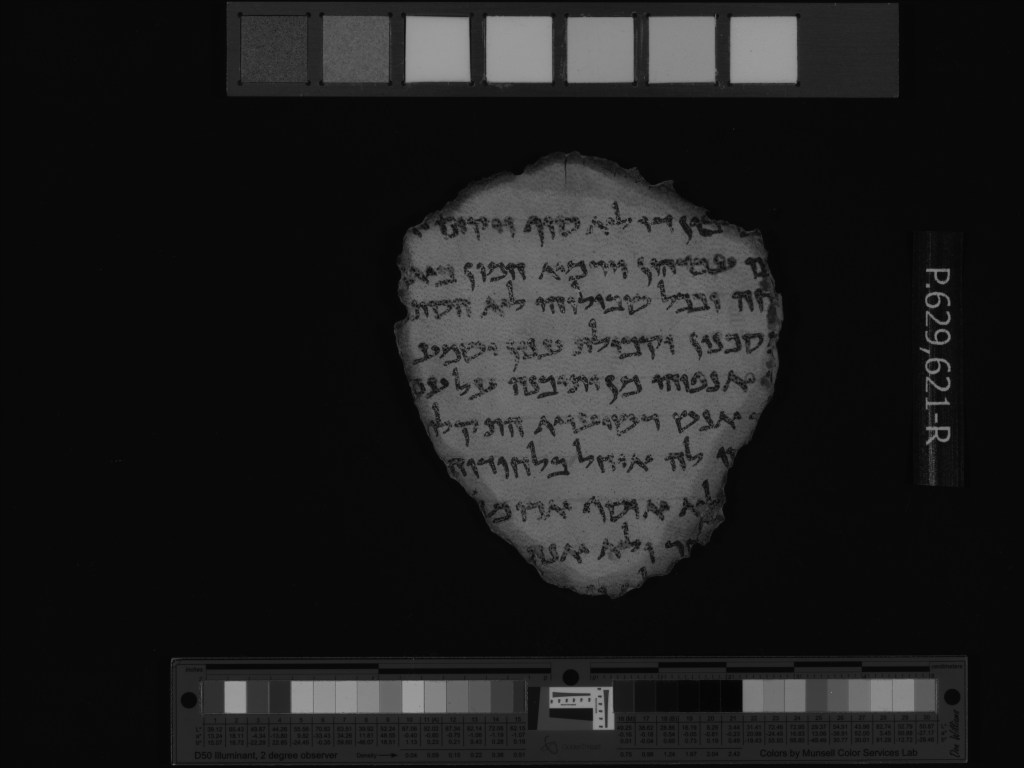
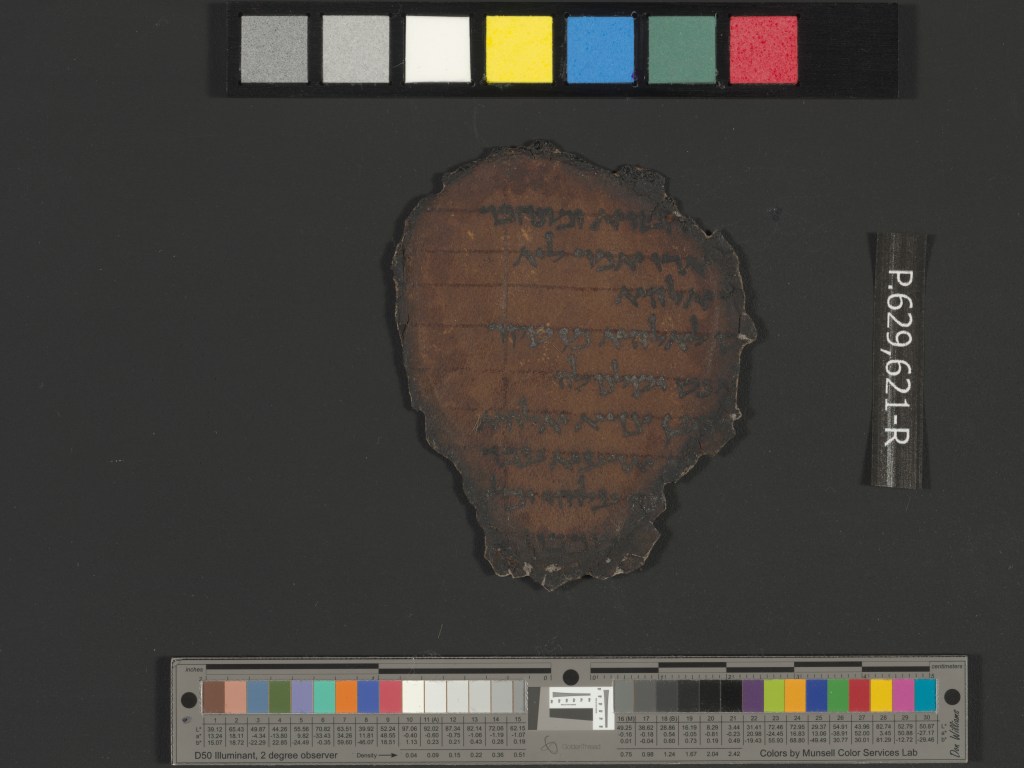
11Q10 is one of the best-preserved manuscripts from Qumran. Although not nearly complete, a good portion of the later chapters of the Book of Job have survived. The fragments on display have distinct “medallion” shapes. Fragments with similar shapes reached the early scholars while they were still part of a wad (i.e. the fragments were stuck together in layers and formed a pile). These wads were successfully separated into individual fragments that could be and deciphered. The book of Job is considered by some to be the most difficult to understand in the entire Hebrew Bible, and this might have been part of the reason into Aramaic – the vernacular language of the period. The book tackles one of the most difficult questions in religious thought: why does a righteous person suffer? This question is explored through a series of dialogues between Job – the suffering righteous person who lost everything – and his three friends. In the earlier chapters Job argues that he had been unfairly punished, while his three friends argue that he must have done something wrong. Towards the middle of the book a new character named Elihu enters the discussion unexpectedly. Elihu presents himself as younger than the other speakers – and therefore he did not interrupt up to that point. The fragments on display contain parts of Elihu’s speeches, in which he seems to rebuke both Job and the three friends for completely misunderstanding how God governs issues of sin and punishment.
Translation
Col. 23 – Frgs. 20+21i (=Job 33:24-32)
1 (33:24) and he will say: Save him from ha[rm …] of
2 fire (that) strangles him. And [his bones] will be filled [with marrow … (25) …] than
3 that of a youth, and he will return to the days of [his] youth [(26) … and] he will listen to him,
4 and he will see his face as he heals […] (27) and according to the work of
5 his hands he will reward him. And he will sa[y …] yet
6 I have not been rewarded according to my path. (28) He has deli[vered …]
7 will see the light. (29) Behold a[ll … m]an
8 two, three times. (30) To br[ing back in the ligh]t
9 of life. (31) Pay attention to this [(Job)… I will sp]eak.
10 [(32) If th]ere are wo[rds …]
Col. 24 – Frgs. 21ii+22i (=Job 34:6-17)
1(34:6 …) without sin. (7) Who […] sins, (8) and associates
2 with doers of evil [… ev]il? (9) For he says: No
3 man changes [ … af]ter God. Blank
4 Blank (10) Now, people […] Far be from God (to do) deceit
5 and from [the] L[ord] to do harm [(11) …] person, He will recompense him
6 {erasure} […] (12) Now then, will God really
7 do wrong, and the Lord […] (13) He made the earth
8 and established the wor[ld. (14) …] withhold his [brea]th to Himself,
9 (15) then […] would die […] they would lie down
10 [(16) …] my [wor]ds. (17) Is it in wrong
Col. 25 – Frgs. 22ii+23 (=Job 34:24-34)
1 [(34:24) …] the mighty without limitation, and He establishes o[thers]
2 [… (25) He kno]ws their work, (26) and hurls them into the pl[ace of]
3 [… (27) …] His [wa]y and all his paths [they] did not obser[ve.]
4 (28) to [… of] the poor, that He may listen to the complaint of the deprived.
5 [(29) … and when he hid]es his face, who can respond to Him about a nation
6 [… (30) …] the wicked people. They tripped
7 [… (31) …] I hope in Him, (32) in him alone
8 […] I will do no more. (33) Behold, […]
9 [… you will ch]oose, and not I, […]
10 [(34) … wo]rds, and a ma[n …]

