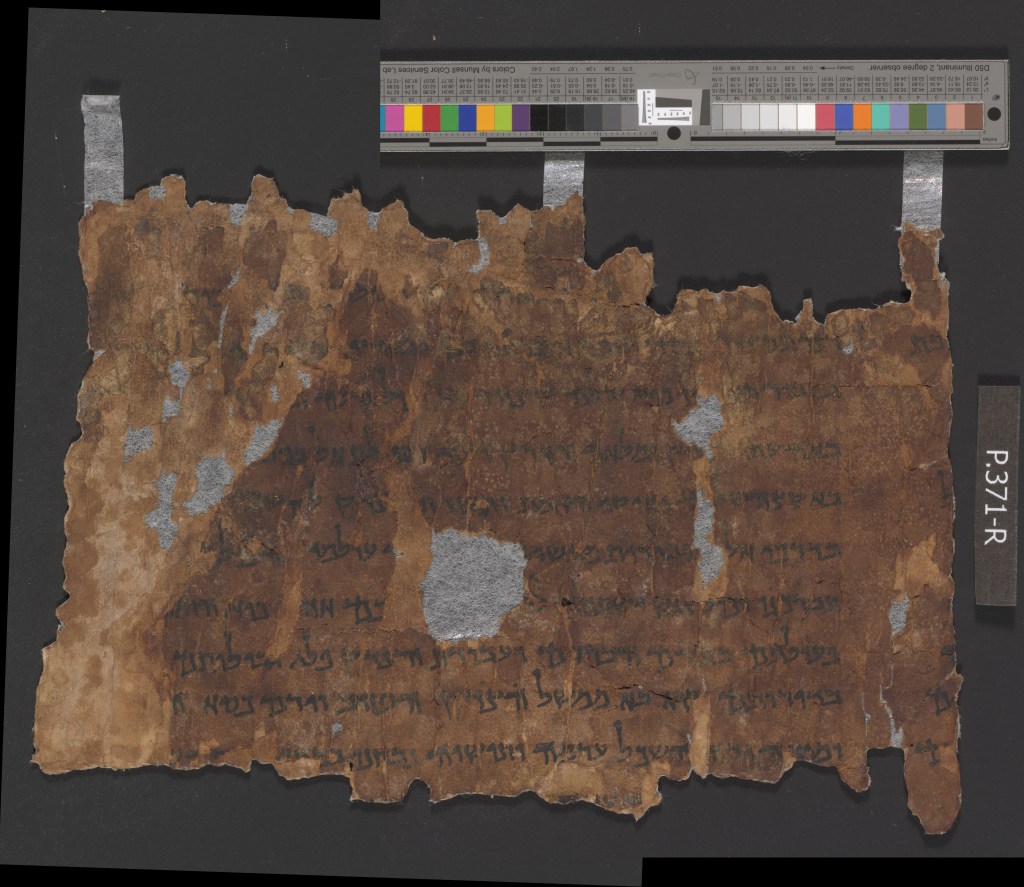
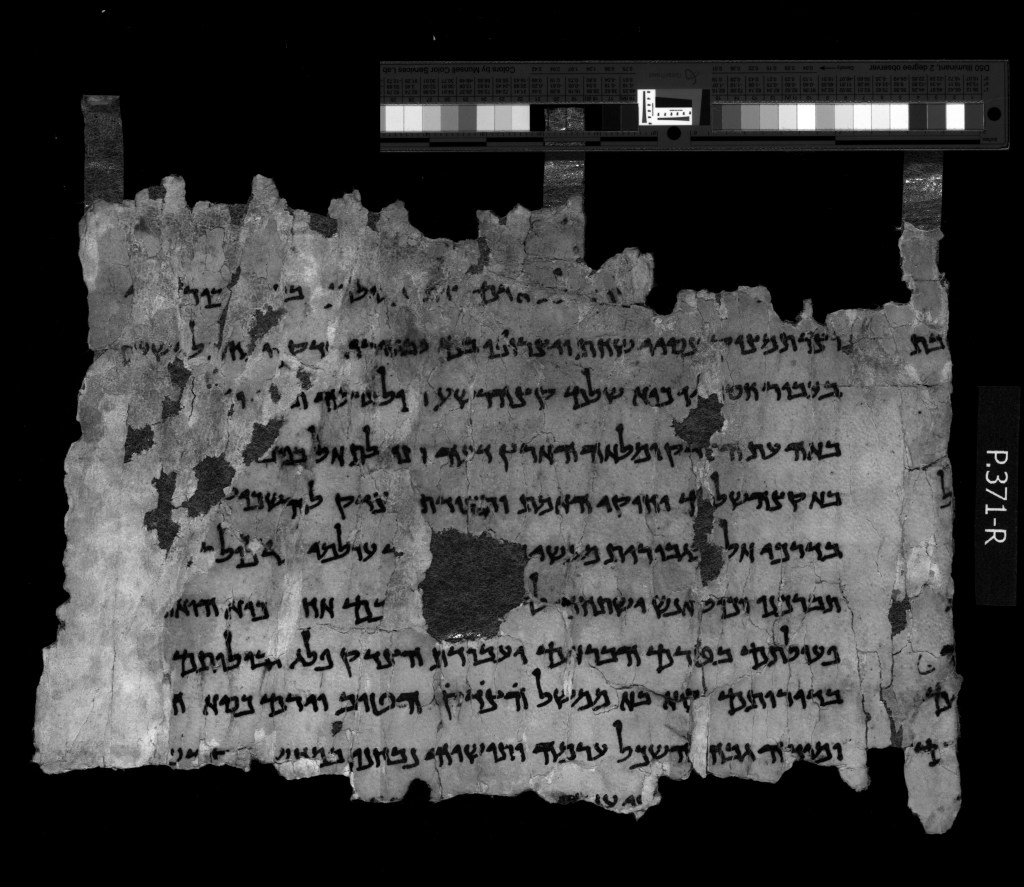
(c) Images Courtesy of the Leon Levy Dead Sea Scrolls Digital Library. Photo, Shai Halevi. www.deadseascrolls.org.il
This is the only surviving copy of this otherwise unknown text, although the themes that appear in it are similar to those found in other eschatological texts. The text is a poetic declaration of the advent of a new age, drawing on language primarily from Ezikiel (along with other biblical prophetic texts). The title was derived from one of the declarations in the text: “the time of righteousness has come”. The text also contains similar declarations about the end of the period of evil and the coming of the period of peace.
It is unclear if this text was composed by the Scrolls community, or other Jews with similar eschatological expectations. The general theme of this text seems to fit well within what we know about the community’s views about the imminent end times. However, similar expectations were shared also by other contemporary Jewish groups and nothing in this text must be understood as deriving from the community’s distinct worldview. On the other hand, some of the scribal practices employed in this manuscript have been linked by some scholars directly to the Scrolls community. So even if this is not a sectarian text, it seems likely that the scribe who copied this manuscript was a member of the Scrolls community.
Translation
Frg. 1ii
1-2 […] … […]
3 and the dread of hardship, and the trial of the pit. And they will refine by them the chosen of justice and he will wipe out [al]l iniquity
4 on account of his pio[us] ones; for the age of wickedness is fulfilled and all injustice will [pass a]way. [For]
5 the time of justice has arrived, and the earth is filled with knowledge and the praise of God. In the da[ys of …]
6 the age of peace has arrived, and the laws of truth, and the testimony of justice, to instruct [all]
7 in God’s paths [and] in the mighty acts of his deeds [… f]or eternal centuries. Every t[ongue]
8 will bless him, and every man will bow down before him, [and they will be] of on[e mi]nd. For he [knows]
9 their actions before they were created, and (for) the service of justice he has divided their territories […]
10 in their generations. For the dominion {of justice} of goodness has arrived, and he will raise the throne of […]
11 and very high. Intelligence, prudence and sound wisdom are tested by [his] h[o]ly desi[gn …]
12 […] … […]

