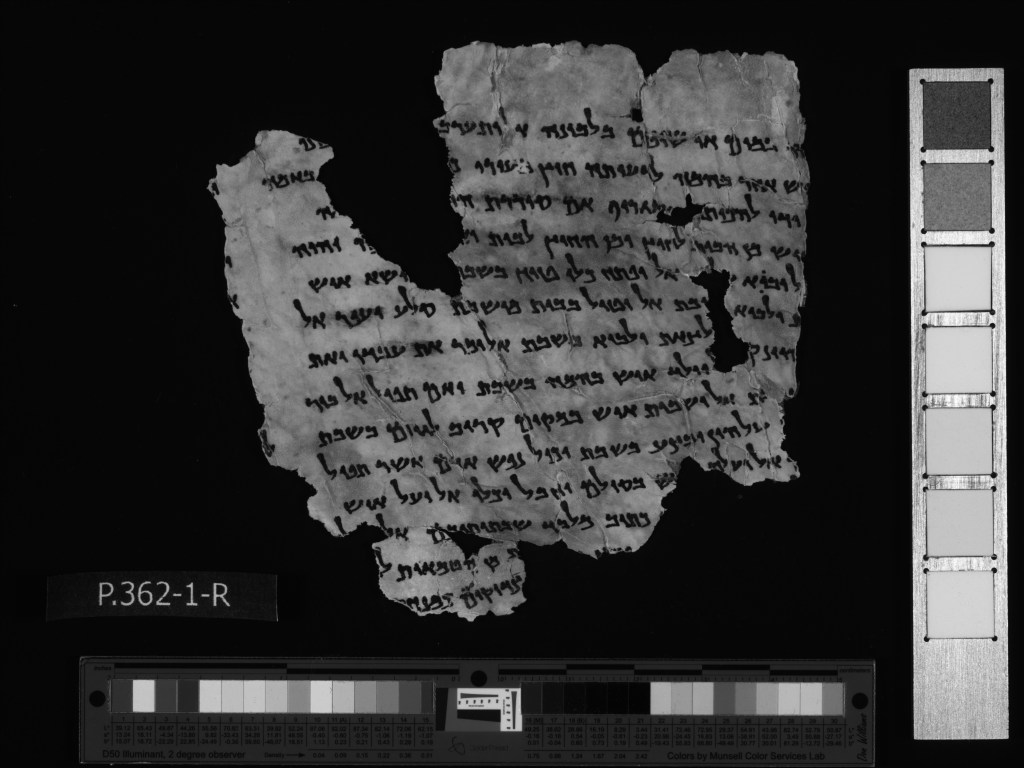
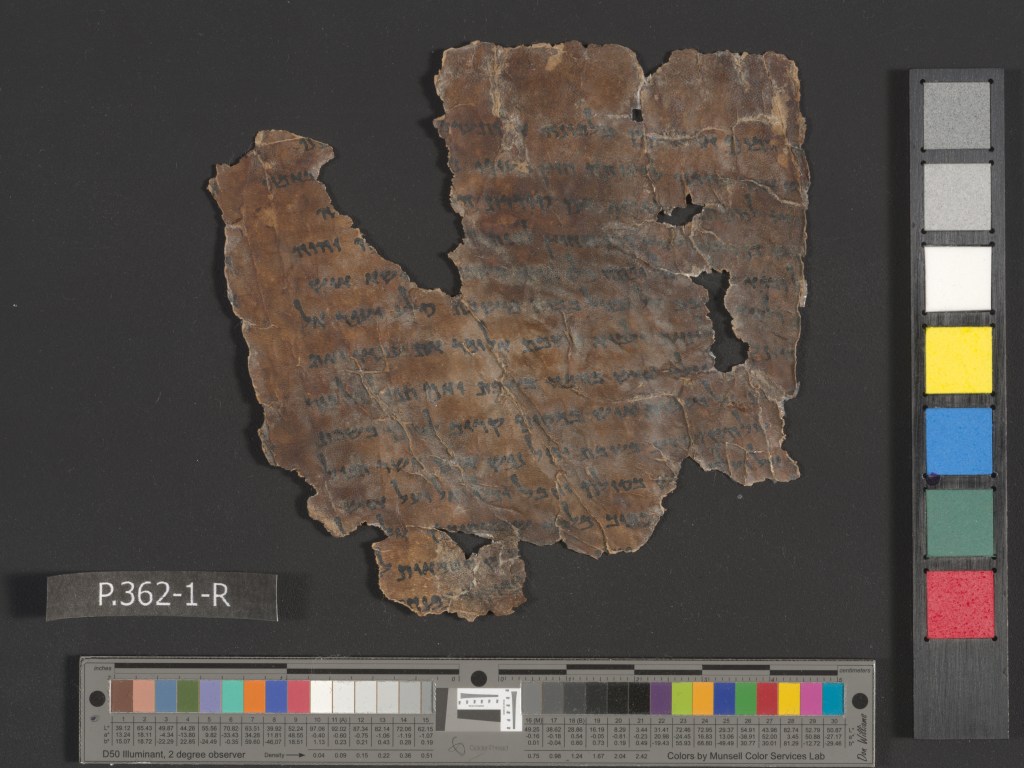
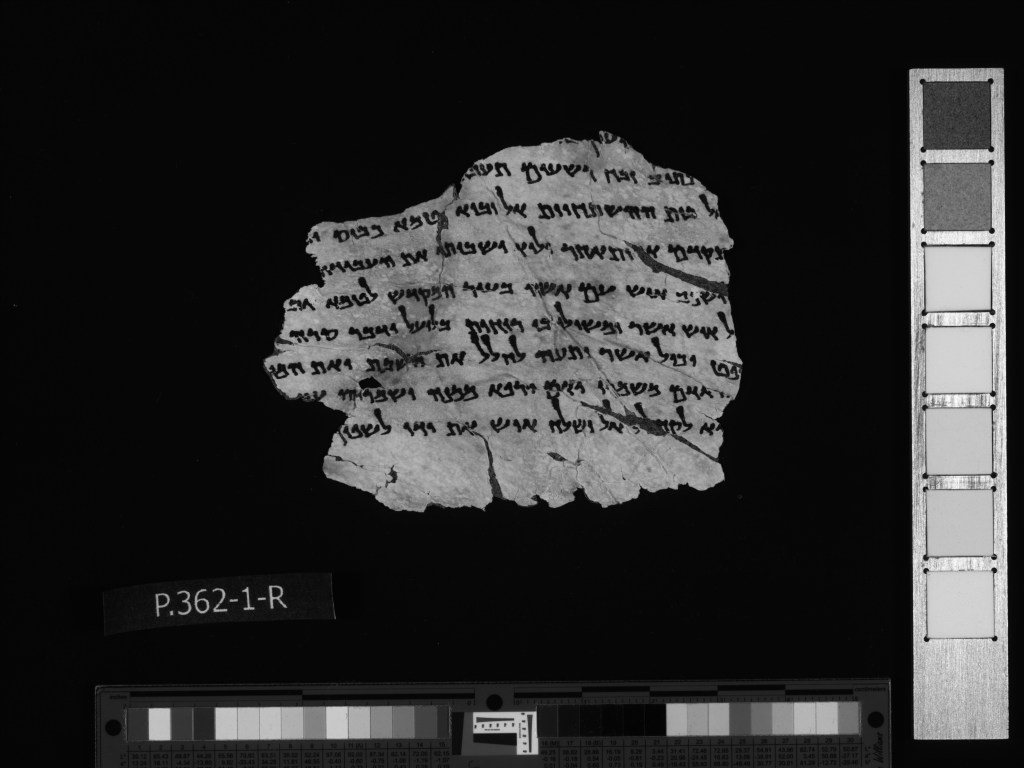
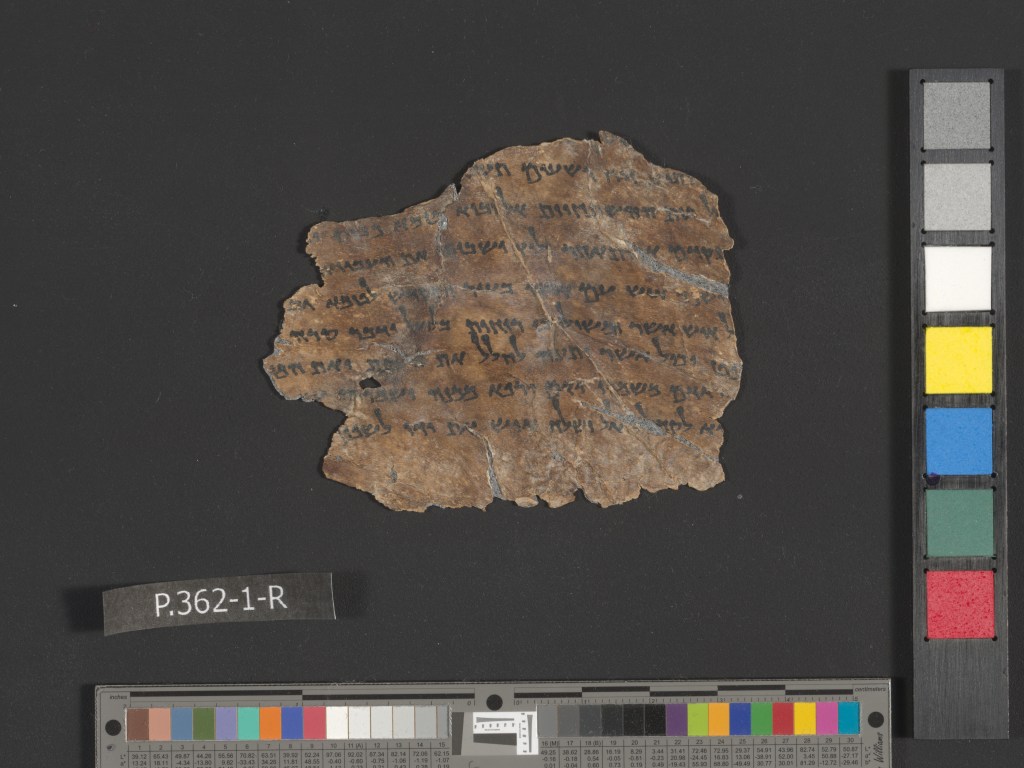
(c) Images Courtesy of the Leon Levy Dead Sea Scrolls Digital Library. Photo, Shai Halevi. www.deadseascrolls.org.il
The Damascus Document’s journey to modern scholarship reads like detective fiction. In 1896, Solomon Schechter discovered two medieval manuscripts tucked away in the Cairo Genizah—that famous repository of discarded Jewish texts. A few prescient scholars suspected these copies originated in the Second Temple period, but they couldn’t prove it. Then came 1947 and the Scroll discoveries. When fragments of ten additional copies emerged from the desert caves, the suspicions were dramatically vindicated: the Damascus Document was indeed ancient, composed nearly two millennia before those Cairo manuscripts were copied. Yet one mystery deepened even as another was solved: How did this text travel from the Dead Sea to medieval Cairo? The path remains unknown, the transmission lost to history. The Damascus Document speaks in the voice of the Sons of Light—a group convinced of their election because they alone followed the Teacher of Righteousness, a divinely commissioned leader who warned Israel of coming judgment while the rest of the nation ignored his message. The text describes a covenant established in “Damascus,” though most scholars read this as allegory rather than geography—”Damascus” representing exile, separation from a corrupted Jerusalem rather than the Syrian city itself. Following this historical-theological prologue comes an extensive legal code: proper conduct, community organization, family law, Sabbath observance spelled out in meticulous detail. Many regulations parallel those in the Community Rule, suggesting shared origins or ongoing dialogue between related groups. Yet crucial differences emerge: the Damascus Document envisions communities with families, children, and domestic life, while the Community Rule portrays a more ascetic existence leaning toward celibacy. How do these texts relate to each other? And how do both connect to Josephus’s famous descriptions of the Essenes? These questions continue to animate scholarly debate, with no consensus in sight.
Detail Translation
Frg. 5i
1 [with lint, unless they have been wa]shed with water or rubbed with incense. No-[one] should intermingle [vol]untarily
2 [on the sabbath. No]-one should go after an animal to pasture it outside his city, exce[pt for two thousand] cubits.
3 [No-one should raise] his hand to strike with a fist. If it is disobedient, [he should not bring] it out
4 [of his house. No-]one [should remove (anything)] from the house to outside, or from outside into the house. an[d if] he is in [a h]ut,
5 [he should remove nothing from it nor] bring anything into [it.] He should not open a sealed vessel on the sabbath. [No-]one should wear
6 [perfumes on themselves, to go] out or come in on the sabbath. In his dwelling house he should not lift stone or dirt.
7 [The nurse should] not [carry] the baby to go out or come in on the sabbath. Do not press one’s (male) servant
8 [or one’s (female) servant or one’s employee on the sa]bb[ath. No]-one should help an animal give birth on the sabbath; and if it has fallen into a pit
9 [or a ditch, he should not pull it up on the sa]bbath. No-one should stay in a place close to gentiles on the sabbath.
10 [No-one should desecrate the sabba]th for the sake of property
and profit on the sabbath. And any living person who shall fall
11 [into a place of water or a pi]t, no-[on]e should raise him out with a ladder or a rope or (other) implement. No-one should offer anything
12 [upon the altar on the sabbath, except the sacrifice of the sabbath, for th]us it is written: “except for your sabbath (sacrifices)” (Lev 23:38). No-[one] should [se]nd
13 [to the altar a sacrifice, or a meal-offering, or incense,] or wood, by the ha[nd of] a man [impure from a]ny of the impurities, so al[lowing him]
14 [to defile the altar, for it is] written: “the sacrifice of the wicked is an abomination, [but the prayer] of the righteous is like an agreeable
15 [meal-offering” (Prov 15:8). And everyone who enters]
the house of prostration should not enter with impurity requiring washing; and when
16 [the trumpets of the assembly sound,] he may advance or retreat,
but they should not interrupt the [entire] service,
17 [for it is holy. No]-one should sleep with a woman in the city of the temple, defiling [the city of the]
18 [temple with their impurity. Ev]ery person who shall be ruled by the spirits of Belial, and who speaks apostasy, according to [the regulation]
19 [of the necromancer or the diviner they shall be] judged. And every one who goes astray, defiling the sabbath and the fes[tivals,]
20 [shall not be executed, for it is upon] men to guard him; and if he is cured of it, they shall guard him for [seven]
21 [years and afterwards he may en]ter the assembly. No-one is to
stretch out his hand to shed [the blood of]

