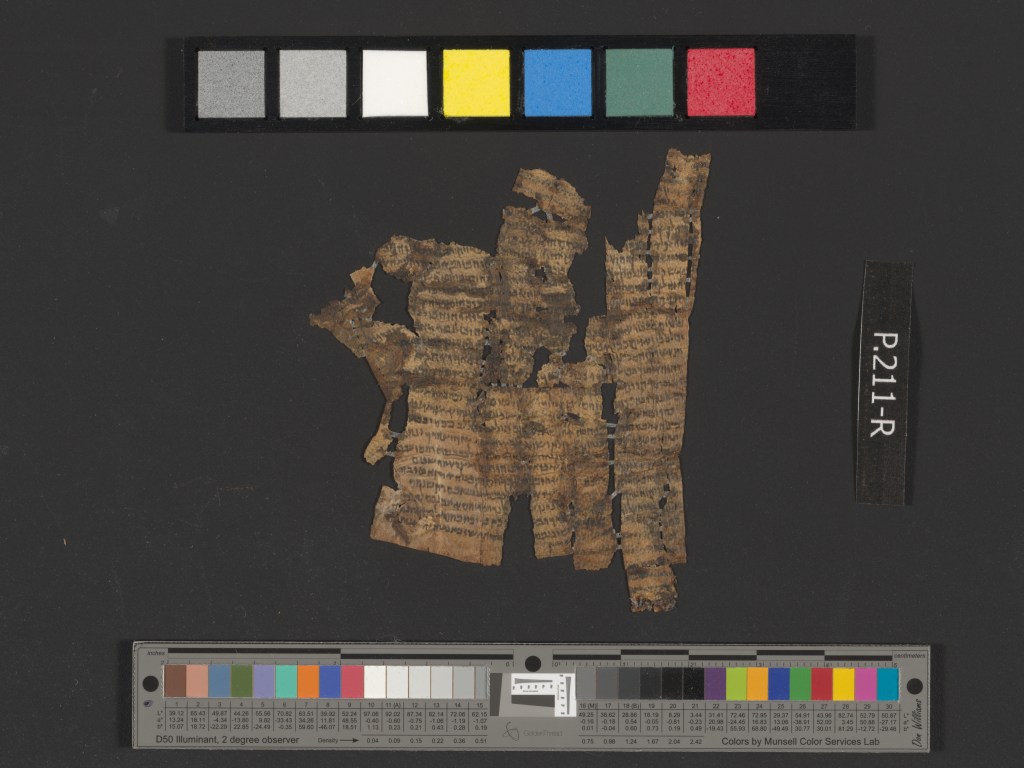
(c) Images Courtesy of the Leon Levy Dead Sea Scrolls Digital Library. Photo, Shai Halevi. www.deadseascrolls.org.il
Turning divine command into physical practice required extraordinary skill. The Qumran caves yielded some twenty-five leather cases and over thirty tiny parchment slips belonging to phylacteries or tefillin—those small leather boxes worn on the arm and forehead that transform biblical words into tangible reminders of covenant. The finds came from Caves 1, 4, 5, and 8 at Qumran, as well as other Judean Desert sites. Each phylactery contained parchment slips inscribed with four passages from Exodus and Deuteronomy. Some ancient examples even included the Decalogue—the Ten Commandments themselves worn close to heart and mind. Here’s what startles: the Qumran phylacteries are far smaller than their modern counterparts. Why? Ancient Jews wore them throughout the day, not just during morning prayers. Continuous wear demanded compact design. This created an almost impossible challenge for scribes. They had to produce parchment of extraordinary thinness—shaving down the upper layer of hide until it became nearly translucent—then inscribe sacred words in letters so minute they’re readable today only under magnification. Example 4Q130 measures between 0.027mm and 0.034mm in thickness. Recent microscopic analysis identified the material as goat skin, testimony to both the scribe’s precision and modern science’s detective work. Spectroscopic studies revealed another surprise: some cases weren’t painted black, diverging from later tradition. Even more remarkable, Micro-CT scanning has shown that some cases still cradle their ancient parchment slips inside—words sealed away for two millennia, waiting to be read again.

